
"Mitsubishi Chemical"
7000 article(s) found

Main chemical constituents of raw coffee beans
Main chemical components of raw coffee beans: content (%) carbohydrate 60.0 reducing sugar 1.0 sucrose 7.0 pectin 2.0 starch 10.0 garrison 5.0 hemicellulose 15.0 holocellulose 18.0 lignin 2.0
The main chemical components of coffee beans
The main chemical composition of green coffee beans: composition content (%) carbohydrate 60.0 reducing sugar 1.0 sucrose 7.0 pectin 2.0 starch 10.0 tulose 5.0 hemicellulose 15.0 total cellulose 18.0 lignin 2.0
Basic knowledge of coffee beans the main chemical components of raw coffee beans
Main chemical components of raw coffee beans: content (%) carbohydrate 60.0 reducing sugar 1.0 sucrose 7.0 pectin 2.0 starch 10.0 garrison 5.0 hemicellulose 15.0 holocellulose 18.0 lignin 2.0
The Chemical reaction of Fine Coffee Technology in Baking
Coffee has a rich, wide range of flavors. Coffee produced in different regions, different elevations, different climates and different producing areas has its own unique characteristics. Raw beans are fragrant and have no usual coffee taste at all; the taste of coffee comes from proper roasting. Show fruity (light roasting) or caramel sweetness (deep roasting). The lighter the baking, the more sour it tastes. Baking.
How to deal with coffee beans to become decaf
In this century, scientists have developed three methods to extract and remove caffeine from coffee beans: (1) Chemical method dissolves caffeine in beans with chemical solvents, which can selectively dissolve substances, so it will not remove all the substances in coffee beans, and can retain the best original taste of beans. Using chemical methods, it is inevitable in coffee beans.

Main chemical constituents of raw coffee beans
Tannin: after extraction, tannin will turn into a yellowish powder, which is easy to blend into water. After boiling, it will decompose and produce pyrosylic acid, which will make the coffee taste worse. If the coffee is soaked and left for several hours, the color of the coffee will become stronger than when it was just soaked, and it is not tasty enough, so it is said that it is best to finish it as soon as possible. Fat: the fat contained in coffee, in flavor.

What is the chemical reaction in the roasting process of coffee beans? What is the thermal decomposition reaction of coffee beans during roasting
Professional coffee knowledge exchange more coffee bean information please follow the coffee workshop (Wechat official account cafe_style) what are the chemical reactions in the roasting process of coffee beans? What is the thermal decomposition reaction of coffee beans during roasting? After roasting at high temperature, coffee beans will produce a variety of charming aromas and flavors, mainly because of the chemical reactions that take place inside the beans during roasting.

The chemical composition of coffee
Caffeine is the most eye-catching of all the ingredients of coffee. It belongs to plant xanthamins (animal muscle components) and has the same properties as theobromine in cocoa and theophylline in green tea.
The average chemical composition of raw coffee beans is as follows
The average chemical composition of raw coffee beans is as follows: water 12%, nitrogen 12%, fat 12%, sugar and dextrin (dextrine) 10%, other non-nitrogen substances 18%, dust 4%, tannin 6.7%, caffeine 1.2%, coffee essential oil 0.1%. Of course, these data are not fixed, and the quantity of some of these ingredients varies greatly, which is why each kind of coffee is so different.
Chemical reaction of Coffee in roasting
Coffee has a rich, wide range of flavors. Coffee produced in different regions, different elevations, different climates and different producing areas has its own unique characteristics. Raw beans are fragrant and have no usual coffee taste at all; the taste of coffee comes from proper roasting. Show fruity (light roasting) or caramel sweetness (deep roasting). The lighter the baking, the more sour it tastes. Baking.

How does the treatment affect the flavor and taste of coffee? the treatment will affect the chemical composition of coffee.
Why do sun beans taste different from water-washed beans? What makes the sweetness of honey handling coffee more obvious? The method of raw bean treatment has a great influence on the flavor, aroma and alcohol thickness of coffee, and it is also an important difference for many people to choose coffee beans. The chemical changes that occur during the processing of coffee beans and how these changes affect the flavor in the cup. We can learn about it together.
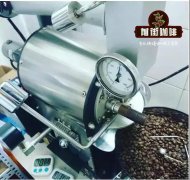
What chemical reactions take place in the process of baking beans?
Coffee itself is a kind of plant, how to show its sour, sweet, bitter, salty and other ever-changing flavor? The answer is that the raw coffee beans need to be roasted, that is, the raw coffee beans are heated in the container (roaster, hand net, etc.), and finally reach the appropriate degree of baking. Coffee beans have undergone earth-shaking changes in the process of roasting, but not just stir-fry them.

Study on the chemistry of small grain coffee in Yunnan, Kunming Institute of plants, Chinese Academy of Sciences
Professional coffee knowledge exchange more coffee bean information Please pay attention to coffee workshop (Wechat official account cafe_style) Coffee as one of the most popular beverages in the world, its composition and physiological function have always been the focus of scientists all over the world. As the largest emerging coffee consumption market in the world, China has not only attracted the attention of a large number of investors, but also promoted the characteristics of agriculture in Yunnan Plateau.
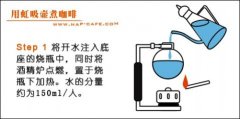
The cooking of the siphon pot always seems to be reminiscent of the utensils of chemical experiments.
The siphon pot (Syphon), also known as the plug pot, always seems to remind people of the utensils of chemical experiments. However, because they are all glass containers, the whole cooking process is clearly visible, which is an excellent brewing method with excellent visual effect. In terms of taste, it is also the favorite of some coffee lovers. At the same time, the whole brewing process will be filled with a very charming aroma of coffee. So, what are you waiting for? I'm coming.
What are the "chemical" ingredients in a cup of coffee?
The taste is delicious and fragrant. As can be seen from the advertising words of coffee, flavor is the soul of coffee. Recently, "Coffee Flavor Chemistry", co-written by Dr. Zeng Fankui of Lanzhou Institute of Chemical Physics of Chinese Academy of Sciences and Professor ou Shiyi of Food Department of Jinan University, was published by Jinan University Publishing House. This is the first academic monograph on coffee processing in China. Set

Basic knowledge of fine coffee the main chemical constituents of raw coffee beans
Main chemical components of raw coffee beans: content (%) carbohydrate 60.0 reducing sugar 1.0 sucrose 7.0 pectin 2.0 starch 10.0 garrison 5.0 hemicellulose 15.0 holocellulose 18.0 lignin 2.0

General knowledge of fine coffee beans the main chemical constituents of raw coffee beans
Main chemical components of raw coffee beans: content (%) carbohydrate 60.0 reducing sugar 1.0 sucrose 7.0 pectin 2.0 starch 10.0 garrison 5.0 hemicellulose 15.0 holocellulose 18.0 lignin 2.0
Basic knowledge of coffee beans the main chemical constituents of raw coffee beans
Main chemical components of raw coffee beans: content (%) carbohydrate 60.0 reducing sugar 1.0 sucrose 7.0 pectin 2.0 starch 10.0 garrison 5.0 hemicellulose 15.0 holocellulose 18.0 lignin 2.0

Basic knowledge of coffee the chemical composition of coffee
Caffeine: caffeine is the most eye-catching of all the ingredients in coffee. It belongs to a kind of phytoxanthin (animal muscle component). It has the same properties as theobromine contained in cocoa, green tea contains the same theophylline, and the percentage of reduction after baking is very small. Caffeine has a very wide range of effects. will affect the human brain, heart, blood vessels, gastrointestinal, muscle and kidney and other parts, the right amount of coffee
Coffee extraction principle = chemical reaction + physical reaction?!
UESTION Hi! Emma! I've been hearing about hydrolysis in coffee brewing. What is it? Can you explain the scientific basis for hydrolysis? How is it different from extraction? Thank you! ANSWER Dear Coffee Drunk in Baltimore: I feel your pain! Coffee brewing is now the most popular